Never Miss a Beat - Get Updates Direct to Your Inbox
Topics:
FILTER:
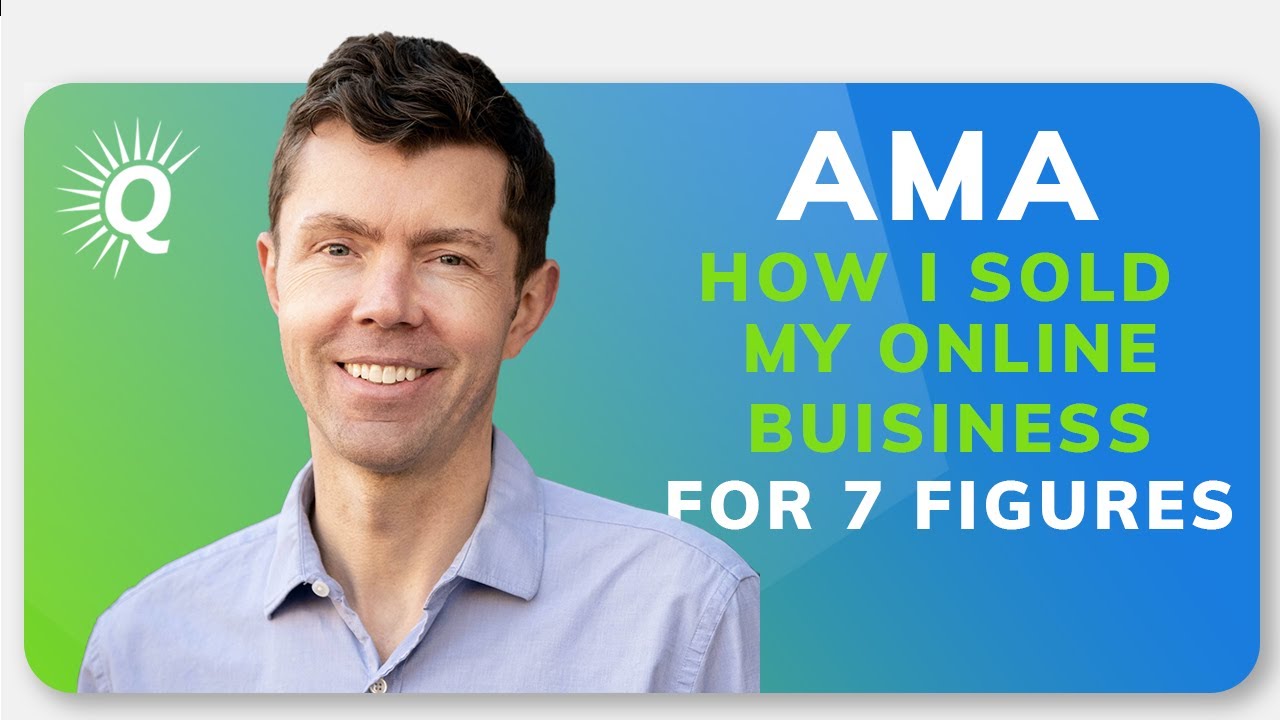
How I Sold My Online Business for 7 Figures with Paul Andersen

TRANSCRIPT
**Sam:**
Welcome, welcome, welcome.
I think we can probably get started.
Welcome, everyone, to Quiet Light’s September AMA featuring Paul Andersen, who’s going to tell us all about how he built and sold his online business for seven figures.
My name is Sam, and I’ll be moderating and facilitating this conversation.
I have a lot of questions, and I hope you have a lot of questions too. I’d rather get yours answered than mine, so if you have a question, you’ll see a Q&A box at the bottom of your screen. That’s the best place to enter questions so we can make sure we’re getting to everybody in the order they come in.
If you’d prefer to ask your question live, you can raise your hand and we’ll get to you that way. You can also enter questions in the chat, but the most effective option is the Q&A box. We’ll be monitoring that throughout the hour.
For those of you who don’t know much about Quiet Light, let me give you a quick overview.
Quiet Light is an entrepreneur-led and entrepreneur-focused company that has been helping people buy, build, and sell online businesses since 2006. That’s a lot of experience.
My favorite part about the company is that every advisor has personally bought, built, or sold an online business. They’re bringing real-world experience and relatable insight to help entrepreneurs through the process.
We also do a tremendous amount of educational work. Think blogs, podcasts, webinars, AMAs like this one, articles, and more. You’ll find all of that at QuietLight.com. So if you’re still hungry for more content after today’s session, head over there. We’ve got plenty of resources available.
Now, on to our guest of honor.
Paul Andersen, welcome.
**Paul Andersen:**
Good morning.
**Sam:**
Paul is an entrepreneur with deep Amazon FBA experience, particularly in physical product businesses, though at this point he can probably speak to a wide variety of online business models.
Over the years, he’s built multiple multi-million-dollar businesses. Most recently, he sold and exited his e-commerce business for seven figures in 2019, which is exactly what we’re here to discuss today.
Before all of that, Paul worked as a CPA and spent time in corporate finance. When he’s not working, he’s spending time with his wife and kids and occasionally playing some pickleball.
Paul, is there anything I missed that the audience should know about you?
**Paul:**
No, that was a great introduction. Thanks, Sam.
One slight correction: I didn’t buy my business and then sell it. I actually started it from scratch with very humble beginnings. It’s a minor detail, but I thought I’d mention it.
I’m excited to jump in. Hopefully I can answer some questions and provide some value. We’ve got a good hour together.
Before we get started, I think Sam has a poll queued up. I’m curious to get a sense of who’s joining us today.
Are you primarily interested in buying a business? Selling a business? Scaling a business?
It’ll be helpful to understand who’s in the audience so we can make sure we’re speaking to everyone’s interests.
**Sam:**
Sorry about that, Paul. I think I just misspoke.
I’ve listened to your podcast before, and it’s a fascinating story.
**Paul:**
No worries at all. Thanks for listening.
**Sam:**
While the poll is running, maybe we can start with your background.
How did you get into entrepreneurship in the first place?
**Paul:**
I think, like a lot of entrepreneurs, there were signs when I was young.
Whether it was mowing lawns, trading baseball cards, or finding little ways to make money, I always had that entrepreneurial curiosity bubbling beneath the surface.
As I got older, though, I took a pretty traditional path. I went to college, studied accounting, earned my CPA, and ultimately spent about ten years working in that world.
Looking back, a lot of it felt like inertia. I was simply moving along the path that was in front of me.
At some point, I started asking myself a question:
*”What race am I actually running?”*
I was spending a lot of time at a job I didn’t particularly love, and I wasn’t really building the kind of freedom or financial future I wanted.
Eventually, I came across Amazon.
What fascinated me was the leverage.
One person can build a multi-million-dollar business through Amazon. That possibility really caught my attention.
I started learning everything I could. I was trying to reverse-engineer a path toward the kind of life I wanted—more freedom, more flexibility, more time with my future family, and work that I actually found interesting.
I got started on Amazon around 2015 or 2016.
My initial investment was $5,000.
At the time, that felt like a huge amount of money. I was wiring funds to a supplier in China that I’d never met in person and communicating with someone on WeChat.
I had a logo designed on Fiverr for five dollars and used that as my brand logo.
I didn’t know everything, but I listened to podcasts, joined Facebook groups, read everything I could find, and tried to give myself the best chance possible.
That was the beginning.
Long story short, I had some failures along the way, but I kept going.
Eventually, I built the leading brand in my particular category on Amazon, grew it into a multi-million-dollar business, and ultimately achieved a seven-figure exit.
Even now, I sometimes have to pinch myself. It all worked out in a way that seemed almost impossible when I first started.
**Sam:**
That’s incredible.
You mentioned some failures along the way.
Did those failures cause you to completely pivot, or were you mostly iterating and improving as you went?
**Paul:**
A little bit of both.
One of the biggest factors on Amazon is simply choosing the right product category.
You can be operationally excellent, but if you’re competing in the wrong market, it’s very difficult to succeed.
It took me some time to figure that out.
I think if you’re willing to take enough swings and continue refining your criteria, eventually you’ll connect.
Some of my failures came from choosing the wrong products.
Others came from inexperience.
For example, I didn’t fully understand how to work with suppliers in China early on. In one of my first shipments, roughly half of the products arrived damaged because of mistakes I should have anticipated.
There were plenty of operational lessons like that.
You learn them one at a time.
**Sam:**
Just a quick reminder for everyone watching: if you have questions, please drop them into the Q&A box. We’ll get to as many as we can throughout the hour.
Now, once you found the business that was clearly working, how did your mindset change?
At what point did you go from thinking, *”I’m building this business”* to *”I may actually be able to sell this someday”*?
**Paul:**
That’s a great question.
Honestly, when I started, I didn’t even realize Amazon businesses could be sold.
That wasn’t really part of my original plan.
What changed was that I began reverse-engineering the outcome I wanted.
My goal was financial independence and freedom.
I started talking with **Joe Valley** about a year to eighteen months before my eventual exit.
I asked questions like:
* What are buyers looking for?
* How can I make my business more attractive?
* What valuation multiples should I expect?
Once I understood the valuation side, I could work backward.
For example, if I wanted a million-dollar exit and Amazon businesses were selling for roughly a three-times multiple, then I knew I needed to build the business to around $330,000 in annual profit.
That changed my mindset.
I stopped focusing solely on growth and started thinking about what would make the business attractive to a future buyer.
**Paul:**
Once I understood the valuation side of things, I started building with the end in mind.
I wasn’t trying to optimize every decision for a future sale, but I was paying much more attention to the characteristics that buyers cared about.
Things like:
* Consistent growth
* Strong margins
* Clean financials
* Operational simplicity
* Reduced owner dependence
I knew that if I could improve those areas, I’d not only have a better business, but I’d also have a more valuable asset if I ever decided to sell.
**Sam:**
You mentioned Joe Valley. What role did he play in the process?
**Paul:**
Joe was incredibly helpful.
As I mentioned, I started talking with him probably a year to eighteen months before I actually sold.
At that point, I wasn’t necessarily ready to go to market. I was really just trying to learn.
I asked a lot of questions.
What does the process look like?
What kinds of buyers are out there?
What drives valuation?
What are the common mistakes sellers make?
Joe was generous with his time and gave me a lot of guidance.
One thing I appreciated was that there was never any pressure.
It wasn’t, “You should sell now.”
It was more, “Here’s how the process works. Here’s what buyers care about. Here’s what you can do if and when you’re ready.”
That helped me prepare long before I actually listed the business.
**Sam:**
Did you always know you would use a broker when the time came?
**Paul:**
I think so.
Part of that comes from my background in finance.
I understood that transactions have a lot of moving parts.
Even though I had experience analyzing businesses and financial statements, I had never sold an online business before.
I knew there would be negotiation.
I knew there would be due diligence.
I knew there would be legal documents.
I knew there would be buyer conversations.
And frankly, I wanted somebody in my corner who had done it many times before.
I viewed it the same way people hire an attorney or a CPA.
Could I technically do some of those things myself?
Probably.
Would I do them as well as a specialist who handles them every day?
Probably not.
**Sam:**
That makes sense.
One thing I hear fairly often is people saying, “Why should I pay a commission when buyers are already reaching out to me directly?”
Did you think about that?
**Paul:**
Absolutely.
In fact, buyers were reaching out to me.
I was receiving acquisition inquiries before I ever went to market.
But I think there’s a misconception that finding one interested buyer is the hard part.
In my opinion, creating a competitive process is the hard part.
There’s a big difference between having one buyer and having multiple qualified buyers.
When you have multiple buyers, several things happen.
First, the valuation often improves.
Second, the terms often improve.
Third, the likelihood of actually getting to closing improves.
If one buyer disappears, you still have options.
I didn’t want to put myself in a position where I became dependent on a single buyer.
**Sam:**
That’s a really interesting point.
Most entrepreneurs spend years building leverage in their business, and then when it’s time to sell, they unknowingly give all of that leverage away by negotiating with just one party.
**Paul:**
Exactly.
And it’s not just leverage.
It’s emotional leverage too.
If you only have one buyer and you’ve mentally committed to that outcome, every conversation becomes stressful.
You start worrying about losing the deal.
You start making concessions you might not otherwise make.
You become reactive instead of strategic.
When there are multiple interested parties, the dynamic changes.
You can stay objective.
**Sam:**
Let’s talk about timing.
How did you know it was the right time to sell?
**Paul:**
For me, it came down to a combination of factors.
The business was doing well.
The market was strong.
I had achieved many of the goals I originally set for myself.
And perhaps most importantly, I had started to feel the pull toward new opportunities.
I wasn’t burned out.
I think that’s an important distinction.
I wasn’t trying to escape the business.
I simply felt that I had accomplished what I wanted to accomplish with it.
There were certainly ways the business could continue growing, but I knew that growth would require a different level of commitment and focus.
At that point, I was more excited about exploring other projects.
**Sam:**
That’s interesting because I think many people assume selling only happens when someone is exhausted or frustrated.
**Paul:**
Not at all.
In fact, I think some of the best exits happen before burnout sets in.
When you’re energized, engaged, and still running the business well, buyers can see that.
The business tends to perform better.
The numbers tend to look better.
And the transition tends to go more smoothly.
One thing I tell people is that selling should ideally be a proactive decision, not a reactive one.
If you’re waiting until you’re completely exhausted, you’re often selling from a weaker position.
**Sam:**
That’s a great point.
Let’s talk about preparation.
Once you decided to sell, what did you spend time cleaning up or improving before taking the business to market?
**Paul:**
The biggest thing was documentation.
A buyer wants confidence.
The easier you can make it for them to understand the business, the better.
So I focused on documenting processes.
How do we place inventory orders?
How do we launch products?
How do we manage customer service?
How do we handle advertising?
Anything that existed primarily in my head needed to get documented.
I also focused on financial organization.
Fortunately, because of my accounting background, that part was already in pretty good shape.
But even then, we spent time making sure everything was clear, organized, and easy to review.
The goal is to reduce friction.
Every unanswered question creates uncertainty.
Every uncertainty creates risk.
And every perceived risk can impact value.
**Sam:**
I love that phrase: every uncertainty creates risk.
Because from the seller’s perspective, they know the business inside and out.
They forget that buyers are looking at it for the very first time.
**Paul:**
Exactly.
And buyers don’t pay for what they hope is true.
They pay for what they can verify.
That’s why documentation matters so much.
**Sam:**
Let’s get into some audience questions.
One of the questions we received is about due diligence.
What was the most surprising part of the due diligence process for you?
**Paul:**
Honestly, I was surprised by how reasonable it was.
Before going through it, I had built it up in my head as this massive, intimidating event.
The reality was that if you have good records and you’ve been operating your business responsibly, due diligence is mostly about verification.
The buyer wants to confirm that what you’ve represented is accurate.
They want to understand the business.
They want to identify any risks.
But they’re not necessarily looking for reasons to kill the deal.
Most buyers want the transaction to close. They’ve already invested time and energy into getting to that point.
So the process felt much more collaborative than I expected.
**Sam:**
Were there any specific areas buyers focused on more heavily than you anticipated?
**Paul:**
Inventory was a big one.
That makes sense because inventory often represents a significant amount of capital.
Buyers wanted to understand inventory levels, lead times, supplier relationships, reorder processes, and historical performance.
Advertising was another area of focus.
They wanted to understand how dependent the business was on advertising and whether advertising performance had remained consistent over time.
Of course, they also spent time reviewing financials, but I expected that.
What surprised me more was how much attention they paid to operational processes.
They wanted to know how the business actually functioned day to day.
**Sam:**
That goes back to documentation, right?
**Paul:**
Exactly.
If a buyer asks how something works and the answer is, “Well, I just know how to do it,” that’s not ideal.
The more a business depends on knowledge that exists only in the owner’s head, the riskier it appears.
That’s why documenting systems and processes can create so much value.
**Sam:**
Another audience question:
What did buyers care about most?
Was there anything they focused on that surprised you?
**Paul:**
I don’t know that anything surprised me.
Most buyers care about predictable cash flow.
Everything else tends to flow from that.
They’re trying to determine whether the earnings are real, sustainable, and transferable.
So they ask questions like:
* How stable are supplier relationships?
* How concentrated are sales?
* How dependent is the business on the owner?
* How predictable are margins?
* How repeatable are operational processes?
Those are all different ways of evaluating risk.
At the end of the day, valuation is largely a function of perceived risk and future opportunity.
The lower the risk and the greater the opportunity, the more attractive the business becomes.
**Sam:**
That’s a really helpful framework.
Rather than thinking of due diligence as a giant checklist, you can think of it as buyers trying to understand risk.
**Paul:**
Exactly.
And once you understand that, many of their questions make perfect sense.
They’re not trying to make your life difficult.
They’re trying to get comfortable.
**Sam:**
Was there anything you wish you had prepared earlier?
Something you would recommend other sellers start working on long before they plan to sell?
**Paul:**
Definitely.
I would start documenting sooner.
Most entrepreneurs underestimate how much knowledge lives inside their own heads.
You don’t realize it until someone asks you to explain every step of a process.
The second thing is bookkeeping.
Clean financials make everything easier.
They help buyers understand the business.
They speed up due diligence.
They reduce uncertainty.
And they make conversations much more productive.
If I had one piece of advice for someone who thinks they might sell in the next few years, it would be:
Get your financials organized and start documenting your business.
Those two things alone can have a huge impact.
**Sam:**
That’s great advice.
Let’s talk about the emotional side of selling.
You’ve spent years building this thing.
Was it difficult when the sale finally happened?
**Paul:**
It was more emotional than I expected.
When you’re in the middle of running a business, it’s easy to focus on numbers.
Revenue.
Profit.
Growth.
But after the sale closes, you realize you’re saying goodbye to something you spent years building.
You remember the late nights.
The mistakes.
The stress.
The wins.
The lessons.
All of it.
So yes, there was definitely an emotional component.
At the same time, I was excited.
I had accomplished what I originally set out to do.
There was a sense of gratitude and satisfaction that came with that.
**Sam:**
Did you have a plan for what came next?
I’ve heard sellers talk about experiencing a bit of an identity shift after exiting.
**Paul:**
That’s a real thing.
One of the reasons I encourage people to think carefully about timing is that selling doesn’t automatically solve every problem.
You should have some idea of what you’re moving toward, not just what you’re moving away from.
For me, I had other interests and projects I wanted to pursue.
I was excited about the next chapter.
That made the transition easier.
But I’ve definitely met entrepreneurs who sold and then spent months trying to figure out what they wanted to do next.
It’s worth thinking about ahead of time.
**Sam:**
That’s such an important point.
People spend years planning the sale itself, but not always enough time planning life afterward.
**Paul:**
Exactly.
The transaction is one event.
Your life after the transaction is the bigger story.
**Sam:**
Let’s talk about valuation.
One of the questions we received is about growth versus profitability.
If you’re building an Amazon business, which one matters more?
**Paul:**
That’s a great question.
The answer is that both matter, but profitability tends to matter more than many entrepreneurs realize.
A lot of people become obsessed with revenue.
Revenue is exciting. It’s easy to talk about.
But buyers don’t acquire revenue. They acquire earnings.
A business doing $5 million in revenue and generating very little profit may be less attractive than a business doing $2 million in revenue with strong margins and healthy earnings.
That doesn’t mean growth isn’t important.
Growth absolutely matters.
What buyers really want to see is profitable growth.
They want evidence that the business has momentum while still generating meaningful cash flow.
**Sam:**
So it’s not necessarily about maximizing revenue at all costs.
**Paul:**
Exactly.
In some cases, sellers unintentionally hurt valuation because they’re so focused on top-line growth that they sacrifice profitability.
A buyer might look at that and wonder:
*”If I stopped pushing for growth and optimized for profit, what would this business actually earn?”*
That’s why it’s important to understand what buyers value.
They value sustainable earnings.
**Sam:**
That makes sense.
Another audience question:
If you were starting over today, would you build another Amazon business?
**Paul:**
Absolutely.
I think Amazon still presents tremendous opportunities.
The landscape is different than it was when I started.
Competition is higher.
Buyers are more sophisticated.
There are more tools available.
But opportunities still exist.
The biggest difference is that I would approach things with a lot more experience.
I would probably make decisions faster.
I would avoid some of the mistakes I made early on.
And I would focus heavily on differentiation.
One thing that’s become increasingly important is building a real brand.
Years ago, you could succeed with fairly basic products.
Today, it’s much more important to create something customers genuinely connect with.
**Sam:**
When you say “real brand,” what does that mean to you?
**Paul:**
It means customers recognize you.
It means they seek you out.
It means you’re creating value beyond simply sourcing a product and listing it on Amazon.
The stronger your brand becomes, the more defensible the business becomes.
That benefits you while you’re operating it, and it often benefits you when it’s time to sell.
**Sam:**
That’s really interesting because it sounds like many of the things that make a business stronger operationally also make it more valuable.
**Paul:**
Exactly.
That’s one of the things I love about building with an exit in mind.
People sometimes think that means making short-term decisions to maximize value.
In reality, many of the characteristics that increase value are simply characteristics of a great business.
Things like:
* Strong systems
* Strong financials
* Strong branding
* Reduced owner dependence
* Consistent profitability
* Diversified risk
Those things make the business better regardless of whether you ever sell it.
**Sam:**
Let’s talk about owner dependence because that comes up frequently.
How dependent was your business on you by the time you sold?
**Paul:**
Much less dependent than it had been in the early years.
In the beginning, I was doing almost everything.
I was handling suppliers.
I was managing inventory.
I was overseeing advertising.
I was solving operational issues.
As the business grew, I gradually delegated more responsibilities and created more systems.
That wasn’t just about preparing for a sale.
It was also about creating a better quality of life.
The interesting thing is that the same steps that give you more freedom as an owner often increase the value of the business.
Buyers like businesses that can operate without the owner being involved in every decision.
**Sam:**
That’s one of those rare situations where everybody wins.
The owner gets more freedom, and the business becomes more valuable.
**Paul:**
Exactly.
Whenever possible, I encourage people to build businesses that don’t require them to be the hero every day.
If you’re the solution to every problem, you’ve created a very demanding job.
If you’ve created systems that solve problems consistently, you’ve built a business.
**Sam:**
I love that distinction.
You built a business, not just a job.
That’s probably a good place to pause before we jump into a few final audience questions.
**Paul:**
Sounds good.
**Sam:**
Let’s jump into a few final audience questions.
One of the most common questions we’re getting is:
Looking back, what was your biggest mistake?
**Paul:**
That’s a tough one because there were quite a few mistakes along the way.
If I had to pick one, I’d say I waited too long to trust myself.
Early on, I spent a lot of time consuming information.
Podcasts.
Courses.
Facebook groups.
Books.
All of those things were helpful.
But at some point, you have to stop preparing and start executing.
I think many entrepreneurs get stuck in learning mode because learning feels productive.
It’s safe.
Launching a product, spending money, or making a decision feels riskier.
Looking back, I would have taken action sooner.
Not reckless action, but decisive action.
Most of the valuable lessons came from doing, not studying.
**Sam:**
That’s a great point.
You can learn a lot from other people, but eventually you have to create your own experience.
**Paul:**
Exactly.
Another mistake was trying to do too much myself.
Entrepreneurs often wear that as a badge of honor.
*”I do everything myself.”*
The reality is that it can become a bottleneck.
There were times when I should have delegated sooner.
There were times when I should have hired help sooner.
There were times when I should have documented processes sooner.
Those lessons became very clear as the business grew.
**Sam:**
We’ve talked quite a bit about preparation and selling.
What’s one thing about the exit process that surprised you?
**Paul:**
The emotional side surprised me.
I mentioned that earlier, but it’s worth emphasizing.
Most entrepreneurs spend years thinking about the financial outcome.
Very few spend years thinking about what it will feel like afterward.
You work on something every day.
You solve problems.
You build relationships.
You create systems.
Then one day, it’s no longer yours.
Even when that’s exactly what you wanted, it’s still an adjustment.
I was prepared for the transaction.
I wasn’t fully prepared for the emotional transition.
**Sam:**
That’s really insightful.
Another question from the audience:
What advice would you give someone who thinks they might want to sell in the next two to three years?
**Paul:**
Start preparing now.
Even if you’re not certain you’ll sell.
Preparation creates options.
The first thing I’d focus on is bookkeeping.
Make sure your financials are accurate.
Make sure they’re organized.
Make sure you can explain them.
The second thing I’d focus on is documentation.
Document recurring processes.
Document operational workflows.
Document key relationships.
Anything that’s currently living in your head should gradually be moved into a system.
The third thing I’d focus on is reducing owner dependence.
Ask yourself:
*”If I disappeared for 30 days, what would break?”*
The answers to that question are often the areas that need the most attention.
**Sam:**
That’s a fantastic exercise.
What would break if I disappeared for 30 days?
I think that would reveal quite a bit.
**Paul:**
It usually does.
And the good news is that every improvement you make benefits you immediately.
You don’t have to wait until a sale.
Better systems improve operations.
Better documentation improves efficiency.
Better financials improve decision-making.
You’re not doing these things solely for a future buyer.
You’re doing them for yourself too.
**Sam:**
Another question:
Do you think sellers focus too much on valuation?
**Paul:**
Sometimes.
Valuation is important.
Obviously, everyone wants a strong outcome.
But I think sellers occasionally become so focused on the headline number that they ignore other important factors.
Terms matter.
Buyer quality matters.
Cultural fit matters.
Certainty matters.
The highest offer isn’t always the best offer.
For example, a slightly lower offer with significantly more cash at closing may actually be preferable to a higher offer that relies heavily on future performance.
Every seller’s priorities are different.
That’s why it’s important to evaluate the entire deal structure, not just the top-line valuation.
**Sam:**
That’s a great reminder.
A deal isn’t just a number.
It’s a collection of terms, expectations, and obligations.
**Paul:**
Exactly.
And when you’re evaluating offers, it’s important to think about what outcome you’re actually trying to achieve.
Some sellers want maximum cash upfront.
Some are willing to bet on future growth.
Some want a very short transition period.
Others are happy to stay involved.
Understanding your own priorities makes decision-making much easier.
**Sam:**
As we start wrapping up, what’s the biggest lesson you’ve taken away from your entrepreneurial journey?
**Paul:**
I think it’s that entrepreneurship creates opportunities that simply don’t exist in many traditional career paths.
You can create something from nothing.
You can learn skills.
You can solve problems.
You can build value.
And over time, that value can become a life-changing asset.
When I started with a small investment and a logo that cost five dollars, I certainly wasn’t thinking about a seven-figure exit.
I was simply trying to build something.
The fact that it ultimately led to financial freedom and a successful exit is something I’m incredibly grateful for.
But the journey itself was valuable too.
The skills I learned.
The relationships I built.
The confidence I gained.
Those things continue long after the transaction is over.
**Sam:**
That’s a perfect place to end.
Paul, thank you so much for joining us today and sharing your story.
I know our audience got a tremendous amount of value from it.
**Paul:**
Thank you for having me.
I really appreciate it.
**Sam:**
And thank you to everyone who attended.
As always, if you’d like more information about buying, building, or selling online businesses, visit QuietLight.com for additional resources, articles, podcasts, and educational content.
Thanks again, everyone. We’ll see you next time.
**End of Webinar**